

Is my dog dehydrated?
As a dog owner, you most likely want your dog to have everything they need to be happy and in good health. The truth is that proper hydration is a big factor in both.
Just like us, our four-legged friends need water to survive and to cope with scorching heat. A lack of water leads to rapid dehydration, which can put your dog at serious risk.
In today's article, we'll look at exactly what dehydration in dogs is, along with the warning signs to watch for, so happy reading!
Dehydration in dogs
Before we get into all the symptoms of dehydration in dogs, let's first look at exactly what dehydration is.
Put simply, your dog becomes dehydrated when they lose more water than they take in. This loss happens through normal processes like panting and urinating. To make up for it, your dog's body starts pulling water from its cells. This, however, causes a loss of key electrolytes such as sodium, potassium and chloride, which can be a precursor to a range of health risks such as organ failure and, in extreme cases, even death.
Signs that your dog is dehydrated
There are a number of causes of dehydration in dogs. The most common include not drinking enough water during the day, vomiting and overheating in hot summer temperatures. Whatever the cause, the symptoms are the same. Some common signs of dehydration in dogs include:
- Excessive panting
- Dry nose
- Dry gums
- Low energy and/or lethargic behaviour
- Dry eyes
- Reduced or non-existent appetite
- Slow reaction time
- Dry, sunken eyes
- Reduced need to urinate
- Dark-coloured urine
- General weakness, especially when trying to walk
- Loss of skin elasticity
Is my dog dehydrated?
If you notice your dog showing any of the dehydration symptoms listed above, give them some water to help them rehydrate.
Of course, some of the dehydration symptoms listed above can be pretty vague or even misleading. For example, your dog might have low energy simply because you've just got back from a long walk. So the real question here remains: "How do I check whether my dog is dehydrated?"
If you suspect your pet might be dehydrated, you can try the following two tests to judge for yourself. Of course, it's always best to consult a vet, even if you're only a little unsure. Only a professional can give you the right guidance. Through our platform you can quickly and easily book a scheduled or emergency online consultation with a vet.
Check your dog's skin elasticity
One of the quickest ways to check whether your dog is dehydrated is to look at their skin. Pinch a small area of your dog's skin between your thumb and forefinger. Hold it for a second, then release the skin. If your pet is properly hydrated, the skin will spring straight back into place. If their body is dehydrated, though, this will show in the skin too, which won't be as elastic and will take a while to return to its original position.
Ideally, we'd advise testing your dog's skin elasticity when you're sure they're properly hydrated. That way, you'll know what's normal for them and can make a better comparison.
Check your dog's gums
Another quick way to check whether your dog is hydrated is to look at their gums. A healthy, hydrated dog will have moist, slippery gums – while a dehydrated dog's gums will be dry and tacky.
Another way to check for dehydration in dogs is to gently press on their gums. This will make them turn white. If the animal is properly hydrated, the gums will almost always return to their natural pink colour as soon as you release the pressure. In cases of dehydration, the capillaries in the gums take longer to refill with blood, and so the gums will stay pale for longer.
How to prevent dehydration in your dog
If your dog is dehydrated, the most important thing is to rehydrate them as soon as possible. Whether you'll just need a bowl of fresh water or a trip to the vet depends entirely on your dog's level of dehydration. It's important to note that every case of dehydration needs immediate treatment, and your best option is a consultation with a vet.
Of course, prevention is extremely important, so these situations don't arise in the first place. We advise trying some of the following ways to make sure your pet stays properly hydrated:
1. Make sure your dog has access to water
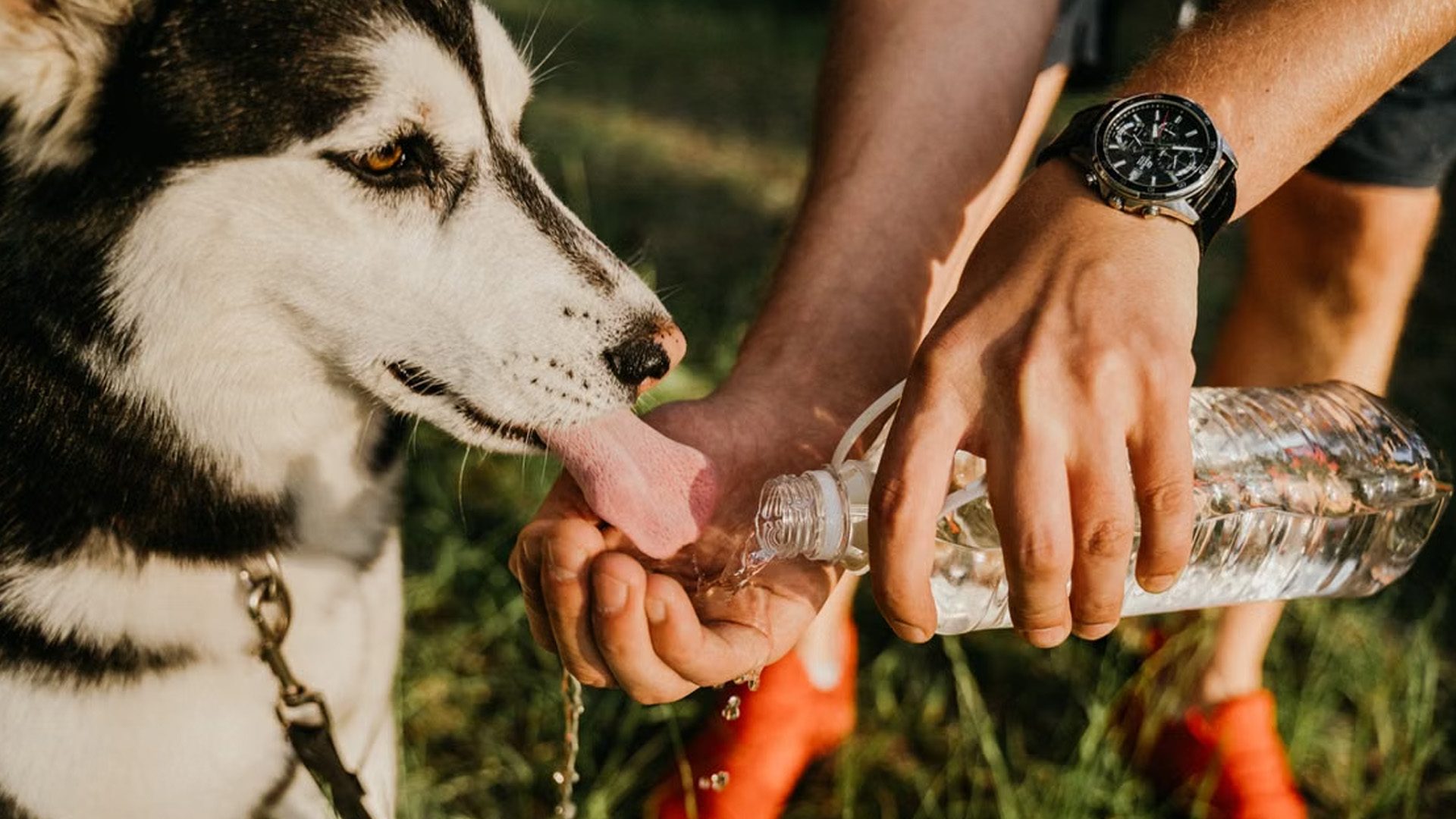
It sounds obvious, but if you want to be sure your dog is properly hydrated, you need to make sure they have easy access to water throughout the day. Make sure their water bowl is somewhere they can easily reach, check it throughout the day, and top it up whenever needed.
2. Keep track of your dog's water intake
One of the best preventive steps you can take is finding out how much water your dog actually drinks. Some dogs need more water than others – and once you know how much your dog drinks when they're properly hydrated, it's easier to notice when they're not drinking enough.
3. Try ice cubes
If your dog isn't drinking water, try ice cubes! Letting your dog lick ice cubes can be a great way to "trick" them into topping up their fluids when, for whatever reason, water just doesn't appeal to them. Ice cubes are a great trick for dogs with nausea and/or vomiting.