

Work out your dog's age: how old is your dog?

You have probably heard the rule: 1 year of a dog's life equals 7 human years. It turns out, though, that the maths isn't quite that simple. Researchers now have a more accurate way of working out a dog's age, one that takes into account their size, their breed and the changes in their DNA over time.
Dog years to human years
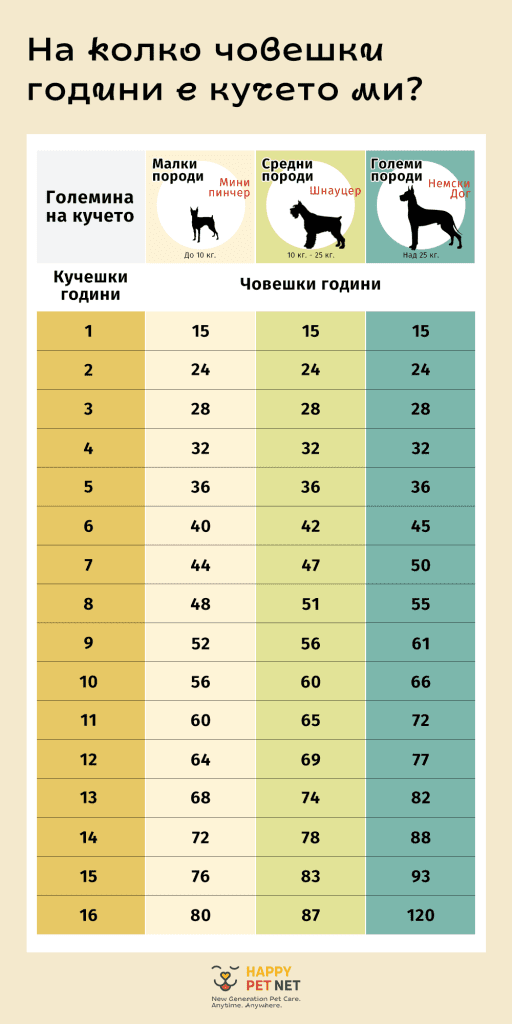
How do dog years work? Dogs mature faster than we do, so the first year of your furry friend's life is equal to about 15 human years.
Size and breed play a part too. Smaller dogs tend to live longer than larger ones, but they can mature faster in the first few years of their lives. A giant puppy may age more slowly at first, yet be approaching middle age at 5. Small breeds and toy breeds only become "senior" at around 10 years old. Medium-sized dogs sit somewhere in the middle on both counts.
How old is my dog in human years?
How do dogs age?
Scientists are still trying to work out why smaller dogs age more slowly and live longer than larger ones. One theory is that it has to do with age-related health problems in dogs. Many of these conditions tend to show up earlier in larger dogs. Because larger dogs age faster, that also speeds up the abnormal growth of cells, which causes diseases such as cancer.
How long do dogs live?
Plenty of things can affect your dog's life expectancy, including their size, breed, genes and lifestyle:
- Size and breed. Smaller breeds of dog tend to outlive larger ones. On average, you can expect a small breed such as a Chihuahua, a Chinese Crested or a Pomeranian to be with you for around 10 to 15 years, with some breeds living up to 18. Large breeds such as the German Shepherd, the Golden Retriever and the Labrador, meanwhile, usually live between 8 and 12 years.
- Genetics. Their genes contribute to your dog's life expectancy. Just like us humans, dogs inherit genes from their parents that can raise their chances of certain health problems. That is why it matters to choose a breeder who uses responsible breeding practices.
- Lifestyle. Serious injuries, infectious diseases and excess weight can all shorten your dog's life expectancy.
Other factors can give dogs a longer and better life too, including advances in nutrition, in medicine, and in the diagnosis and treatment of disease. Diagnostics are key to your pet's overall health!
Signs of ageing in dogs
If you have adopted a puppy but don't know their history, you may not know how old they are. Even without a date of birth, you can still make a good guess at their age.
A dog's teeth should give you a rough idea of their age. These guidelines will vary from dog to dog, and they also depend on the kind of dental care (if any) the dog had before you got them.
- Up to 8 weeks: All the milk teeth are in place.
- Up to 7 months: All the permanent teeth are in place, white and clean.
- Up to 1-2 years: The teeth are duller and the back teeth may have some yellowing.
- Up to 3-5 years: All the teeth may have a build-up of tartar and some wear.
- Up to 5-10 years: The teeth show more wear and signs of disease.
- Up to 10-15 years: The teeth are worn down and there is likely to be a heavy build-up of tartar. Some teeth may be missing.
Your vet can also work out your dog's age from a full physical examination or from tests that look at the bones, joints, muscles and internal organs. Older dogs may show some particular signs of ageing, including:
- Cloudy eyes;
- A greying coat. It starts around the muzzle and then spreads to other areas of the face, head and body;
- Loose skin;
- Stiff legs;
- Bad breath;
- Trouble getting around;
- New lumps;
- Changes in weight;
- Trouble urinating or passing stools, or loss of bowel and bladder control;
- Fear of people or objects they once recognised;
- Changes in sleep (restlessness at night);
- Doing the same thing over and over again;
- Forgetfulness (cues and commands);
- Confusion;
- A drop in activity;
Why does my dog's age matter?
When you know how old your dog is, you can look after them better throughout their life. Watch for physical and mental signs of ageing in a small dog from around 7 or 8 years old, and in a large dog from around 5 or 6.
How to help your dog live longer
Here are a few tips to help your dog live a longer and healthier life:
- Feed them healthy food. Use a high-quality pet food with protein, fat, carbohydrates, vitamins and minerals.
- Keep their weight within a normal range. Talk to your vet about what a normal weight is for your dog and how much exercise they need. As a rule, though, high-energy breeds need more exercise than low-energy ones.
- Keep their vaccines and preventive treatments up to date. The most important are parvovirus, heartworm prevention, flea and tick treatment, worming, distemper, rabies and adenovirus.
- Know the symptoms of the conditions linked to your dog's breed. Ask your vet which signs to look out for in your particular breed.
- Take your pet for check-ups with a vet. Your dog should be examined and have blood tests on a regular schedule. How often will depend on their age and individual needs.
- Keep them away from toxins and other harmful substances. That includes edible and inedible things alike: alcohol, caffeine, chocolate, antifreeze, fabric softeners, insecticides and pesticides.
Has it been a while since your dog's last check-up? Book your next appointment with a qualified vet easily, quickly and conveniently through HAPPY PET NET at this link.
And if you have an urgent question and need an answer right away, we recommend booking an instant online consultation!