

Is your dog left-pawed or right-pawed? Here's how to find out!
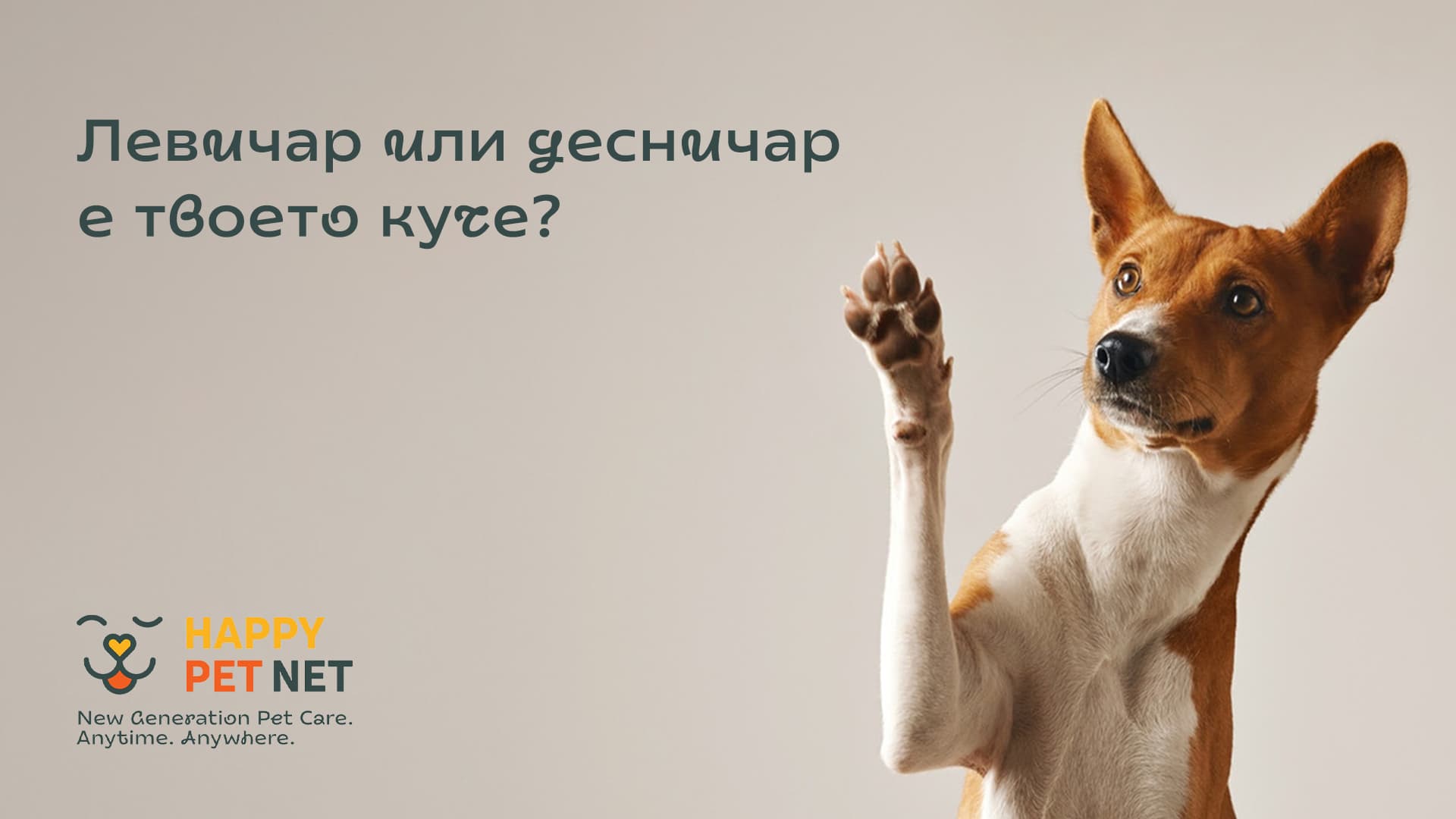
Think about which hand you write with, or how you hold your fork. Are you right-handed or left-handed? Now think about your dog. You might be surprised to learn that, just as people prefer to use their right or left hand, many dogs prefer to use one paw over the other. Since a dog's brain is organised much like ours, with two hemispheres, each with its own specialisation, they too can show a preference, or what researchers call "sidedness" (laterality).
Most people are right-handed, with around 10% of the world preferring to use their left hand. The same can't be said for dogs, though. Our furry friends show a much more even split between right- and left-pawed. What's more, many dogs are ambilateral, meaning they're equally comfortable using either paw, which is what we'd call ambidextrous in people. That said, the exact percentage of right-pawed, left-pawed and ambilateral dogs depends on how laterality is measured.
Method 1
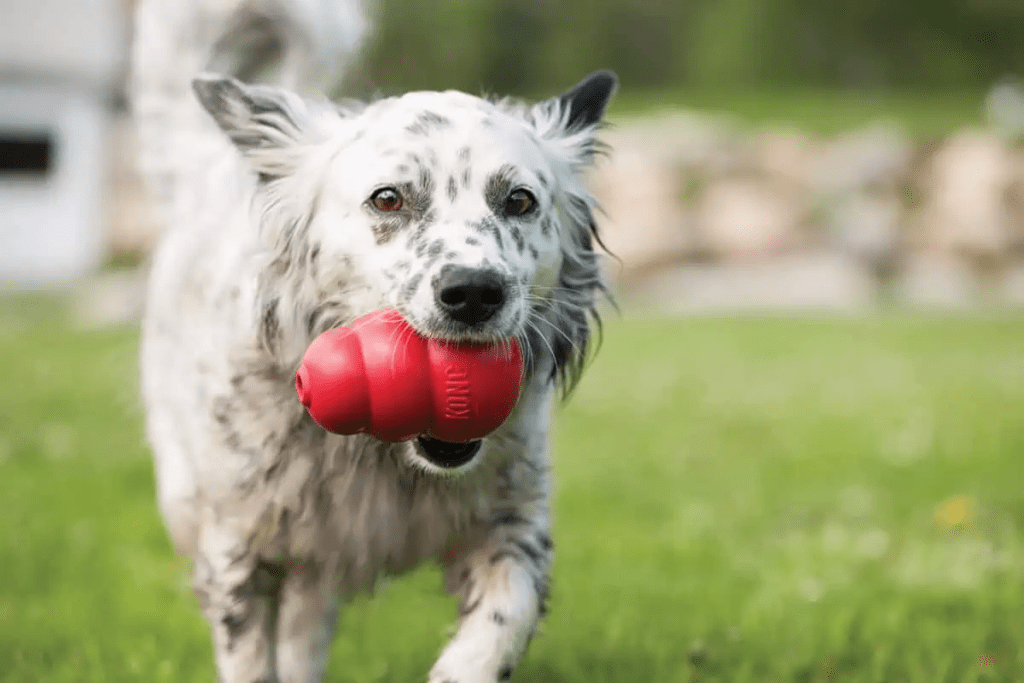
One of the most popular research methods is known as the Kong test. The experiment involves giving a dog a Kong toy – a hollow cylindrical rubber toy stuffed with food. The dog has to hold the toy still while it works to get the food out. The number of times the dog uses its left paw to hold the toy is compared with the number of times it uses its right paw, or even both paws at once. This allows researchers to classify the dog's paw preference. These studies tend to show roughly equal numbers of left-pawed dogs, right-pawed dogs and dogs with no paw preference.
Method 2
Another way of looking at laterality is the first-step test. In this experiment, researchers measure which front paw the dog uses to take its first step from a standing position. After numerous repeats, the dog's paw preference can be classified. Unlike the Kong test, this method doesn't depend on the dog's level of food motivation. This technique produced different results to the Kong test, with far more dogs showing a preference for the right paw.
Method 3
Another study looks at laterality by placing bowls of food at a 45-degree angle to the dog's left and right, and letting it choose a bowl. The dog gets to eat from both bowls during the trial, but its first choice in most trials is used to classify its sidedness. The results show that over half of dogs are ambilateral, while the rest are almost evenly split between right- and left-paw preference.
Does it matter?
Paw preference, like handedness in people, is linked to activity in the brain's hemispheres. The left hemisphere controls the right side of the body, and the right hemisphere controls the left. Since each hemisphere is involved in processing different emotions, sidedness can influence temperament and behaviour. One study found that ambilateral dogs show slightly less aggression towards strangers. In fact, left-pawed dogs show this behaviour the most. (Of course, there are many more factors linked to aggression than simple paw preference, such as socialisation history, past trauma and health condition. And as the researchers themselves acknowledge, the temperament assessment used may not be sensitive enough to pick up differences between individuals based on their paw preference alone.) Another study found that potential guide dogs that are right-pawed have a higher success rate in their training programmes. Future research may uncover more links between behaviour, personality and paw preference in dogs.
How do I find out my dog's preference?
You might want to know your own dog's paw preference. After all, if you're going to teach them to give a paw or wave at you, it would help to teach them to do it with their dominant paw. You can try the Kong test, the first-step test or the bowl-choice task at home. Make sure you collect plenty of data. The official Kong test and first-step test rely on 50 trials. Of course, you can also come up with your own test. For example, you could try holding a treat in your closed hand and note which paw your dog uses to interact with your hand. You can also watch your dog's behaviour and notice any sidedness. For example, which hind paw they use to scratch themselves, or which leg your male dog lifts when he urinates.