

How to feed your dog a healthy diet?
Key facts:
- Feed your puppy a complete and balanced dog food to help them gain weight healthily.
- Excessive weight gain can be caused by switching to adult dog food too early.
- If you find it hard to feel your puppy's ribs, they may be overweight.
Have you got a new puppy, or are you about to become an owner for the first time? Congratulations! So what now? As well as enjoying the cuddles, play, and the challenges and rewards of puppy training, it's up to you to make sure your dog gets the right amount of food and exercise. Maintaining healthy weight gain helps ensure a smooth transition from puppy to full maturity.
A healthy diet and exercise for young puppies
The first thing to do after getting a new dog is to discuss the right diet for them with the breeder (if applicable) and with a vet. You can reach a qualified vet quickly, easily and conveniently through an online consultation via HAPPY PET NET.
Bear in mind that changing your puppy's food during the first few days can add extra stress and cause digestive problems.
At this first visit, your vet should help you get to grips with the basics of healthy feeding and exercise for puppies, including:
1. Understanding how nutritional needs vary by age and breed size
Young puppies' nutritional needs differ from those of adult dogs. Large and giant breeds also have different requirements to small breeds. If you have a giant-breed puppy, you need to find food formulated for giant-breed puppies.
2. Don't overfeed
There's no need to add anything to a diet that's already labelled as complete and balanced. Owners should read and follow the feeding instructions on the food label, based on their pet's age and weight. Remember to feed smaller portions more often, rather than giving too much at once. Depending on your pet's breed and size, it's recommended you feed them three times a day from two to six months old.
After that, you can move to twice a day. Giant-breed dogs, on the other hand, may need feeding three times a day until around six to eight months. It's a good idea to remove food bowls 30 minutes after putting them down, and make sure your dog always has fresh water.
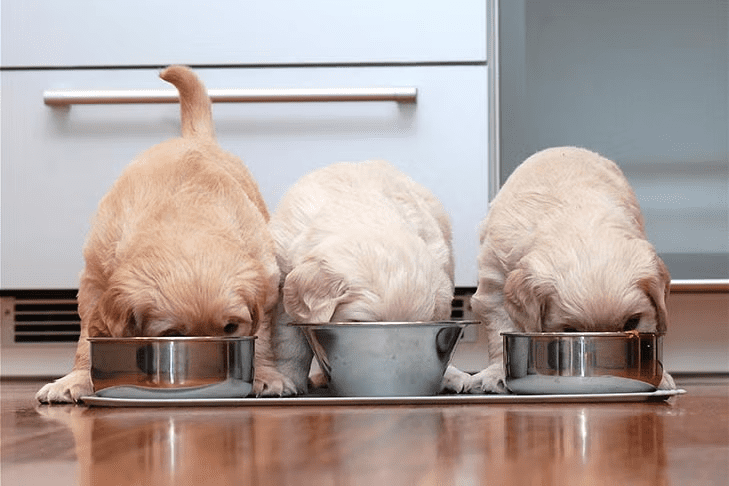
Photo: ©demanescale - stock.adobe.com
3. Don't overdo the exercise
As a general rule, puppies should get 10 minutes of exercise a day for every month of their age. For example, 10 minutes at one month, 20 minutes at two months, and so on. This time can be spread out over the day.
Puppies shouldn't run around too much before their joints have fully fused. This often happens between 12 and 16 months in many breeds, although in giant breeds it may not happen until 18-20 months. Otherwise, this kind of exercise can lead to stress and health problems in the joints and bones.
Recognise the signs of healthy weight gain
So what are some physical signs that your puppy's weight gain is heading in the right direction? According to various vets, your pet's ribs should be easy to feel, and you should be able to see a noticeable waist when looking from the side and from above. In other words, if you find it hard to feel your puppy's ribs, or you notice a rounded belly, these are signs of overfeeding and being overweight.
These are general guidelines that vary by breed. For the best guidance, your vet will be able to help you accurately assess your puppy's weight. Some of the most common mistakes people make that contribute to unhealthy weight gain in puppies include:
Switching to adult dog food too early
Growing puppies of small and medium breeds should be fed a puppy formula from an established manufacturer until 12 months old. Puppies of large and giant breeds should stay on a diet specially formulated for large-breed puppies until 12-18 months old.
Not knowing how neutering reduces calorie needs
Once puppies have been through this procedure, they don't need to eat as much. So you should plan to reduce your puppy's daily calorie intake. This helps keep your dog at a healthy weight.
Know when to see a vet
If your puppy isn't eating well, you should consult a vet immediately.
Routine visits early on can help prevent further weight gain, as your vet can help you make adjustments to your puppy's feeding and prevent the long-term effects of being overweight or obese.
BOOK AN ONLINE CONSULTATION WITH A VETDo you like this kind of content? Check out our Blog section! You can also follow HAPPY PET NET on social media, where we post interesting and fun pet-related content every day!
Follow HAPPY PET NET on Facebook Follow HAPPY PET NET on Instagram