


7 dog breeds prone to dental disease

Dental disease is a serious business. It doesn't just affect your dog's teeth and gums — left untreated, it can also cause infections that eventually lead to organ failure. Periodontal disease is the most common condition in dogs generally, but some breeds are at higher risk than others.
Knowing which conditions your furry friend is predisposed to can help you give them the best possible care. Just as it matters to know your own family's medical history, it's worth understanding how your dog's genes can affect their health.
It's essential for owners to take their pets for regular dental check-ups with a vet and to practise regular oral hygiene, whatever the breed. Of course, some dogs — especially smaller breeds — are at higher risk of developing periodontal disease. In the following sections we'll look at seven breeds you need to be especially careful with.
1. Collie
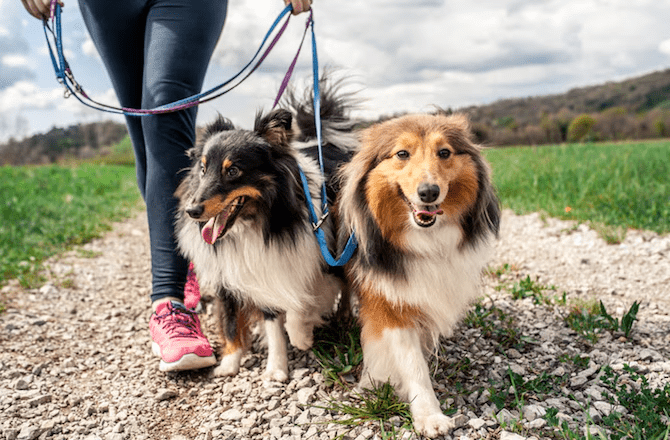
Collies are one of the breeds most affected by an "overbite". An overbite is an unusual relationship between the dental arches, where the lower jaw is shorter than normal relative to the upper jaw. It's often seen in very young puppies.
In these cases your vet may recommend interceptive orthodontics — a procedure carried out on young dogs whose facial bones are still growing. Sometimes all the deciduous (baby) lower canine teeth and incisors are extracted to remove the discomfort and encourage the lower jaw to grow forward.
Once the puppy reaches adulthood, vets focus on treating secondary problems such as tooth-on-tooth wear and soft-tissue trauma. Depending on severity, treatment options in adult dogs include orthodontic movement (applying force to a tooth), crown reduction with vital pulp therapy, or extraction.
2. Yorkshire Terrier
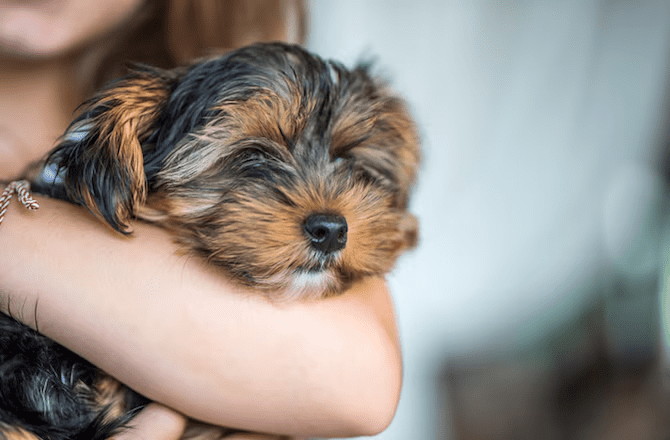
Small dog breeds such as the Yorkshire Terrier, as well as Poodles, Maltese and Pomeranians, commonly have persistent baby teeth. You can often see baby teeth still in place right next to the adult teeth. The general rule is that two teeth shouldn't occupy the same space at the same time in the same mouth. Food and debris easily collect in these hard-to-reach areas, predisposing the dog to periodontal disease.
Vets recommend that persistent baby teeth be removed straight away. When they fail to fall out in time, the adult teeth may fail to erupt, or may come in at the wrong angle and cause an orthodontic malocclusion.
3. Chihuahua
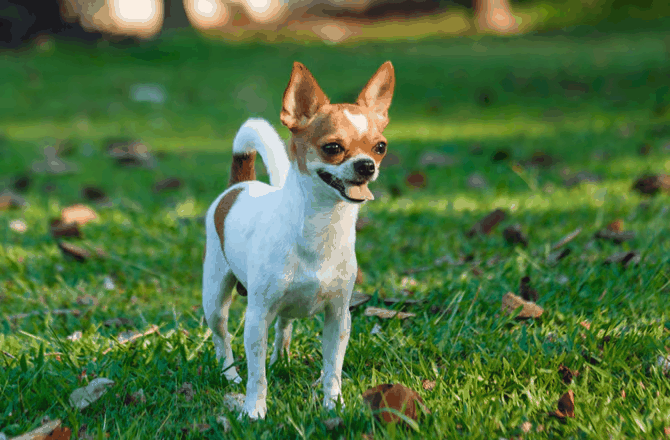
A Chihuahua needs to fit 42 teeth into its mouth — the same number of teeth as every other breed. The trouble is, there simply isn't enough room for all those teeth in such small mouths. This causes crowding, which lets food and debris collect between the teeth. Plaque bacteria then build up, which can break down soft and hard tissue and lead to periodontal disease.
Other breeds in this category include the Maltese, Poodle, Yorkshire Terrier, Pomeranian, Lhasa Apso, Cavalier King Charles Spaniel and Shih Tzu.
4. Dachshund
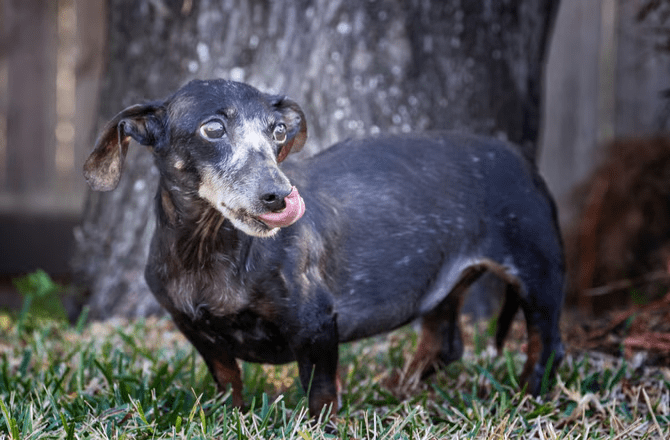
The Dachshund's narrow muzzle makes it prone to developing periodontal pockets — spaces created by the loss of teeth and bone where bacteria thrive — particularly on the inner surfaces of the upper canine teeth.
Treatment may include deep root planing, along with periodontal treatments such as guided tissue regeneration or surgical extraction. The Collie is another example of a narrow-muzzled breed.
5. Boxer
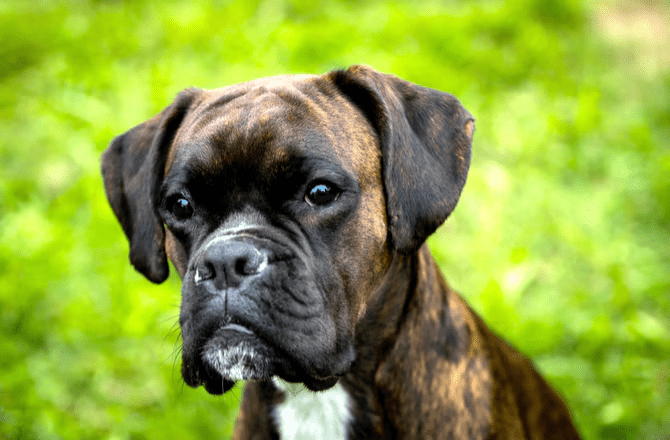
Boxers, along with Great Danes, Mastiffs, Bulldogs and Collies, top the list of breeds that develop gingival hyperplasia — an overgrowth or thickening of the gum tissue. This reaction is most often caused by an inflammatory response to dental plaque and bacteria, or as a side effect of certain medications.
Vets focus treatment on reducing the amount of plaque bacteria in the mouth and stopping or reducing medications that can cause gingival hyperplasia. In advanced cases, surgical resection to restore the gums to a more normal anatomy — known as gingivectomy or gingivoplasty — is indicated.
6. Shih Tzu

Shih Tzus are more prone to delayed tooth eruption — a condition where the dog's teeth break through the gums later than normal. This usually isn't a problem, as the teeth eventually come through in time. However, teeth that fail to erupt can cause problems down the line, such as teeth fusing together and (dentigerous) cyst formation. In certain cases, oral surgery may be carried out to encourage the teeth to erupt.
7. Labrador
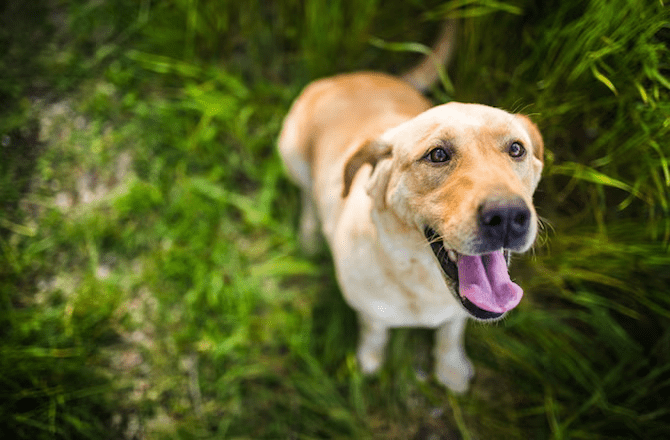
Unlike smaller breeds, which are more genetically predisposed to periodontal disease, larger breeds are more likely to suffer tooth fractures. Big, active breeds such as Labradors and Shepherds tend to get into more mischief, and the most common reason these breeds end up at the vet's is a broken or worn tooth. Vets recommend avoiding hard chew toys and tennis balls, and seeing your vet if you notice a broken or changed tooth.
Look after your dog's health!
Some dog breeds may be genetically predisposed to dental disease, but that doesn't mean they're doomed to a lifetime of poor oral health. Environmental factors such as home care, underlying conditions and diet matter too. Frequent vet check-ups are key to your four-legged friend's overall dental health!
On top of that, daily tooth brushing is the gold standard of home care for preventing plaque, tartar and bacterial build-up. Treatments such as water additives, dental-formula food and treats, and oral rinses are also helpful. Just remember never to use human toothpaste or products containing fluoride or xylitol, as these can be toxic to dogs!
Signs of periodontal disease — and your cue to call the vet — include bleeding gums, bad breath, loose teeth and excessive drooling.
For more information, we recommend speaking to your vet! You can visit HAPPY PET NET to find a qualified vet in your city!
BOOK AN ONLINE CONSULTATION WITH A VET TODAY!