


How often should you walk your dog?

Like people, dogs need daily movement to feel good and stay healthy. Dogs need exercise to maintain muscle tone as well as a suitable weight for their age and breed. But walking your dog isn't just about physical activity. Walks provide mental stimulation too, because they help your dog build confidence and avoid potential behavioural problems such as anxiety and aggression.
Just how beneficial is a walk?
Many people think of dog walks as a way to burn off energy or a chance for their pet to go to the toilet. Your dog doesn't have to just sniff bushes and relieve themselves. It can be genuinely interactive.
Some dogs, especially younger ones, have boundless energy. Exercise, including long walks, can tire them out, leading to a calmer, quieter pet at home.
But what really matters for dogs is consistency. Having a routine is reassuring for a dog and helps them predict what the schedule looks like. Dogs are better equipped to regulate their emotions when they know what to expect, which in this case means regular walks at the same time every day.
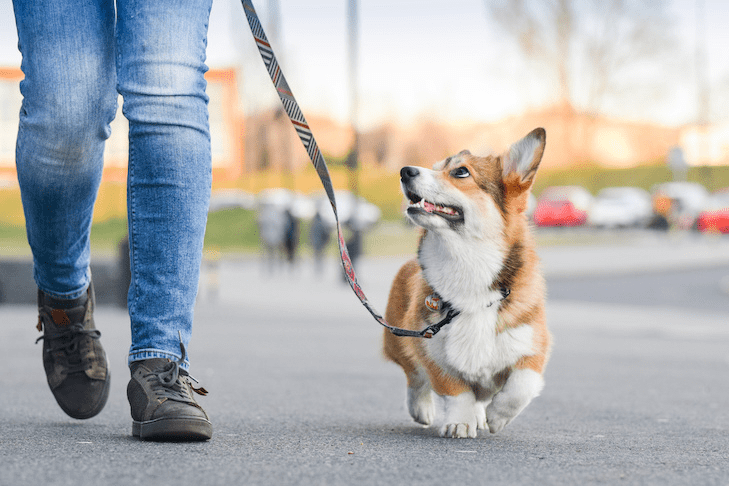
When is it safe to walk a young puppy?
It's essential to be careful with walks for young puppies, because some viruses, such as parvovirus, are highly contagious and potentially life-threatening. Most puppies finish their vaccinations by 16 weeks of age – after that point there's no problem with them being near other dogs. In the meantime, limit your puppy's contact with unfamiliar dogs.
Many vets recommend waiting two weeks after the last booster, to allow the dog's immune system to respond fully.
Young puppies also aren't very good at regulating their body temperature, so you need to factor in the weather before heading out for a walk. If you get a puppy in summer, make sure you don't walk them on hot asphalt. The same applies in winter.
How much exercise do dogs need?
The amount of exercise a dog needs can vary from dog to dog, depending on factors such as age, health and breed. Here are a few standard guidelines you can follow:
Young puppies
Compared with adult dogs, puppies have less stamina and need a rest every 2 to 4 hours, so you won't be able to take them too far, but you'll need to take them out more often. You should also get them comfortable with a lead before committing to a full walk. You can practise short walks outside your building to get them used to it, then build up by gradually increasing the distance.
With a 10-week-old puppy, you can go out for a 10-minute walk two or three times a day. For the first few months, it's best to stick to short, frequent walks.
Adult dogs
If your dog hasn't been very active or isn't particularly fit, a 10 to 15-minute walk is a great starting point. As with puppies, keep the walk short and positive. Check your dog's pace and see whether they're lagging behind or pulling ahead of you. You may need to slow down or speed up.
If your dog doesn't have any underlying health problems, you can gradually increase the length of the walk or take them out twice a day. How often you walk your dog depends on your schedule, as well as your dog's energy and personality.
Dogs with mobility problems can benefit from short walks to avoid joint stiffness and inflammation. A harness is a great way to help larger dogs get around.
Older dogs
If your dog is willing and able to walk, exercise is an excellent way to keep them fit and active. In addition, older dogs benefit from experiencing new sights, sounds and smells to keep them stimulated.
The pace simply needs to be slower. If your dog has arthritis, slow, frequent movement is beneficial for them.
Consult your vet and watch your dog for signs of pain and fatigue, such as limping, stopping, lying down, heavy panting or trouble getting up or down from kerbs. If the walk is too long or too strenuous, let your dog ride in a cart or trolley to rest.
You can easily and conveniently book an online consultation with a vet through HAPPY PET NET to discuss your pet's health and get the most accurate guidance!
Tips for walking your dog
Treat the walk as a chance to train your dog and build a bond through new experiences. Positive reinforcement offers the best chance of success – use treats and plenty of praise.
Some dogs are ready to take on the world. They want to meet people, while others may be shy. Our advice is to tailor the walk to your dog's comfort zone. Either way, the goal is for your dog to feel confident and not overwhelmed by encounters with people or other dogs.
With young puppies and older dogs, bear in mind the wear on their joints. Keep an easy walking pace and limit their time on asphalt or concrete, choosing grassy or wooded paths instead. You can also use dog boots or paw balm if their paws are prone to cracking or getting sore.