

How to bathe a cat: Step-by-step tips
Knowing how to bathe a cat is essential for every owner.
Do cats need bathing? is a common question among cat owners wondering whether their pet needs regular baths. And it's true that, on the whole, cats don't need much bathing. With their bristly tongues, they're usually able to keep their coat clean without any extra help.
Even so, even indoors, your cat can end up dealing with mess — whether from their litter tray, spilled food or drink, or dirt of some other kind.
Here's what you need to know about how to bathe a cat, including preparation tips, supplies and step-by-step instructions.
How to tell if your cat needs a bath
There are many reasons your cat might need a bath, including:
- External parasites, such as fleas
- Stubborn mess
- Reduced ability to self-groom due to age or weight
- Long-haired cats, who pick up dirt easily
- A hairless cat, who needs help absorbing sebum (the oily substance the body produces to protect and moisturise the skin)
Does bathing a cat help with human allergies?
If a member of your family is allergic to cats, you might be tempted to bathe your pet more often to reduce dander. However, various studies have found that coat itself isn't the main cause of allergies in most cases.
A protein found in cats' saliva is the main cat allergen, which is transferred onto the coat and skin during self-grooming and then released into the environment.
Allergists may advise you to bathe your cat to reduce the allergen. If your cat resists frequent baths, though, consider feeding them an allergen-reducing cat food instead.
How often should you bathe your cat?
There's no set frequency for bathing a cat, although bathing too often can strip the beneficial oils from their coat.
Long-haired cats, such as Persians, may need more frequent grooming to keep their coat glossy, clean and free of tangles and mats. Short-haired cats may only need weekly brushing and the occasional bath when they get dirty.
You can also ask your vet or a professional groomer how often to bathe your cat. Based on their breed, skin and coat health and any other issues, they can tell you whether general grooming is enough, or whether/when a bath is needed, and which cat shampoo is right for your pet.
Preparing to bathe your cat
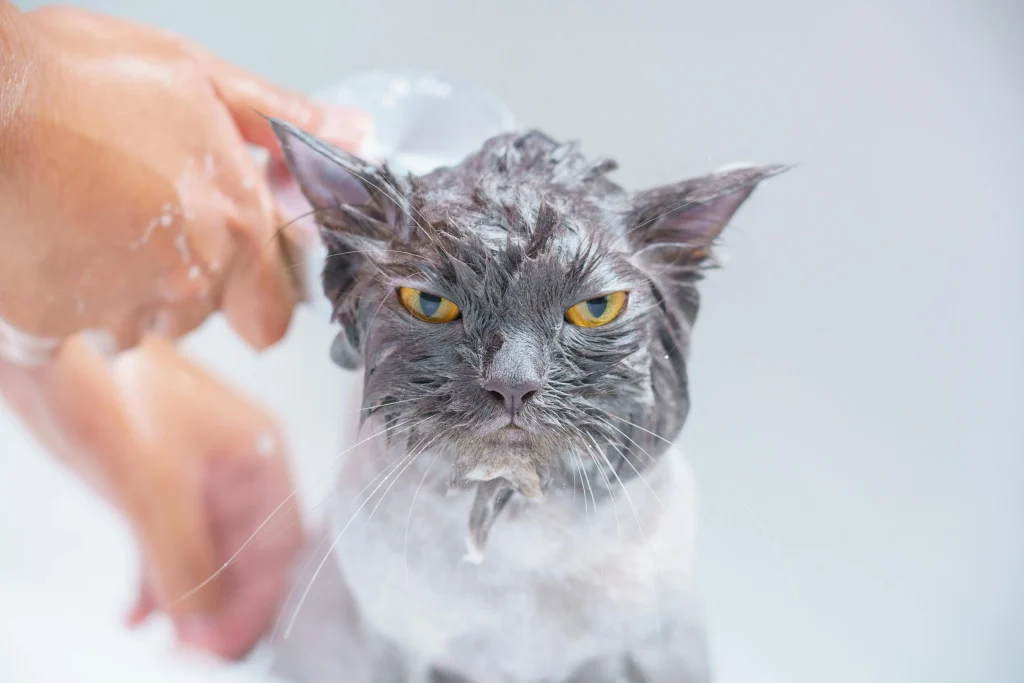
Many cats don't like water, especially if they weren't bathed as kittens. Here's how you can help prepare them – and yourself – for a bath:
- Gradually get your cat used to water. Drip a little water onto their coat and paws before you start the bath. Remember to talk to them in a soothing voice and offer treats. You may need to repeat this a few times before they get used to the feel of water.
- Brush your cat. Before you get them wet, brush your cat to remove matted dirt and any loose debris.
- Trim your cat's claws. This will help you avoid getting scratched.
- Choose a bathing spot. A sink can work well for kittens and smaller cats. Larger cats can be bathed in a bathtub.
- Plan for short baths. This will reduce stress for both of you.
How to bathe a cat, step by step
Although there's no single best way to bathe a cat, these steps and commonly used practices can help make it a stress-free experience.
- Fill your sink/bathtub. Add around ten centimetres of water. The best water temperature for a cat bath is warm, but not hot.
- Slowly lower your cat into the water. Holding your pet gently by the scruff, lower them into the sink or bathtub. With their back to you, you're less likely to get scratched.
- Rinse your cat. Gently pour water over their back. If you have a helper, they can hold your pet while you do this.
- Apply shampoo. Lather your cat's coat with shampoo, taking care to avoid their eyes and ears. (Check the label to see whether the shampoo needs to be diluted with water.)
- Rinse the coat thoroughly. Leaving traces of shampoo on their coat can cause skin irritation.
- Dry your cat. Towels can work well after washing your cat. For long-haired cats, consider wrapping and holding them, since rubbing can tangle their coat. Hairdryers on a cool setting can also work, if your cat can tolerate them.
Remember to give your cat plenty of love and treats throughout, to help them feel as comfortable as possible.
How to bathe an aggressive cat
If you have an aggressive cat and you're worried about being scratched during a bath, make sure you try acclimatising your pet to water beforehand. Keeping their back to you in the bathtub can also help.
Remember, if you don't feel confident bathing your cat, it's better to get in touch with a professional groomer.
How to bathe a cat who hates water
You might be wondering, "Why do cats hate baths?", if your pet doesn't like water. You may not be able to fully change their mind, but you can take steps to help your pet feel comfortable and safe during a bath.
Take time to acclimatise them to water before the bath. Also, using a gentle touch, warm water and treats increases the chances that your cat will tolerate – and maybe even enjoy – bath time.
That said, if your cat hates water and can be kept clean without bathing, spare them the experience.
Enjoy this kind of content? Check out our Blog section! You can also follow HAPPY PET NET on social media, where we post interesting and fun pet-related content every day!
Follow HAPPY PET NET on Facebook Follow HAPPY PET NET on Instagram